
Book Now
Book a free estimate

The scorching triple-digit temperatures, intense humidity, and long cooling season of Texas make it necessary to look for powerful AC units for residential and commercial purposes.
ACs with a high SEER2 rating and variable-speed compressors are much more efficient, providing consistent temperature and excellent humidity control.
But which unit to consider when getting AC installation in Austin TX? Read our recommendations.
AC Unit | Max SEER/SEER2 | Dehumidification | Warranty | What Makes it Good? |
Trane XV20i True Comfort | 21.5 | Excellent | Comes with both base and registered limited warranty. The registered warranty lasts for 10 years. | This unit contains the Spine Fin™ all-aluminum coil. This helps make the design a lot resilient to the high head-pressures and corrosion caused by hot Austin days. |
Carrier Infinity 26 | 24 | Best-in-Class | 10-year parts limited warranty and a 10-year unit replacement warranty for compressor failures | Their Greenspeed® Intelligence allows the system to prioritize moisture removal even when the temperature set-point is reached, preventing that uncomfortable indoor feeling. |
Lennox SL28XCV | 25.8 | Superior | 10-Year Limited Warranty on covered components including compressor | With an excellent SEER2 rating on the market, this is for the homeowner looking to maintain a silent, steady indoor climate while keeping the bills as low as possible. |
American Standard AccuComfort Variable Speed Platinum 20 | 24 | Excellent | It comes with a 12-year limited warranty on the compressor. There is also a 10-year limited warranty on the outdoor coil. The plan contains a 10-year limited warranty on internal functional parts. | Built on the same mechanical platform as Trane, this unit is widely regarded by Texas technicians for having a bulletproof AccuComfort™ compressor. This compressor thrives under heavy loads. |
Daikin Fit DX6VC | 17.2 | Good | 12-Year Unit Replacement Limited Warranty and 12-Year Parts Limited Warranty available for registered units. | A side-discharge (compact) unit. It is perfect for Austin’s high-density neighborhoods where side-yard space is limited, without sacrificing inverter-driven comfort. |
Here are the details.
This unit is designed with Trane TrueComfort Variable Speed technology. This helps it to adjust its speed to deliver a consistent flow of comfortable and cool air.
The unit has a long-lasting durability and a solid design. The powder-paint finish enhances the durability even more. The all-aluminum coil Spine Fin™ helps make the design a lot more resilient to the high head-pressures and corrosion caused by hot Austin days.
This AC also has quiet operation, and extreme efficiency helping it to achieve up to a 21.5 SEER2 rating. This reduces your bill by a great margin.
This unit also meets the Energy Star requirements. It saves up to 55% of energy.
Note: Trane’s 2026 models (XV20i) have transitioned to R-454B refrigerant to comply with the EPA’s January 1, 2026, installation mandate.
This AC unit with Greenspeed Intelligence is highly advanced and efficient. The energy-efficient AC provides enhanced cooling, quiet operation, and comfortable service for your home. The unit comes with a variable-speed compressor that makes its output adapt to the needs of your home.
It is an Energy Star certified unit with the cooling SEER2 of up to 24. The humidity control of the unit is excellent. This unit is capable of removing up to 400% more moisture than a standard system. It also runs quietly with sound levels as low as 51 decibels.
This air conditioner is designed to be fully digital and highly efficient. It has a variable capacity with an efficiency rating of up to 25.8 SEER2. The unit has also been designated as one of the Most Efficient ENERGY STAR® certified products in 2022.
Products that get this recognition are designed to prevent greenhouse gas emissions by meeting rigorous energy efficiency performance levels.
The unit stands out from the rest with its Quantum Coil. This is a proprietary aluminum alloy that helps the unit fight against the harsh weather elements of Austin.
This unit comes with a precise temperature control facility, making it appropriate for Austin’s heat. With the help of the variable speed technology, the Platinum 20 adjusts its speed gradually over a broader range. This helps create a consistent flow of cool air to match the ideal temperature you want at home.
Platinum 20 is built to be durable, courtesy of its sturdy construction and high-quality materials used. It also has a link communication technology feature. This helps the unit control communication between the thermostat, indoor unit, and outdoor unit. All of this helps maximize efficiency and home comfort.
The unit comes with a SEER2 rating of up to 24. It operates quietly all day long, with noise only reaching 64 to 76 dBA.
With an SEER2 rating of 17.2, this unit is designed for homeowners looking for a good balance among energy savings, superior comfort, and quiet operation. This Daikin Fit system is a side-discharge and smart HVAC unit that comes with variable-speed swing compressors to maintain a reasonable temperature and performance. The unit is suitable for homes with limited space in their side yard.
The unit runs quietly, providing an enhanced acoustical comfort - up to 3 different sound levels (as low as 45dBA).
It has smart features such as a field-selectable boost mode that helps in increasing the compressor speed during high loads. The coil and ambient temperature sensors help control the temperature, ensuring a uniform flow of air.
When shortlisting an AC unit for your Austin property, consider doing the following:
Choose a reputable HVAC contractor to assess your home, including its size, windows, and insulation, to determine the perfect BTUs/tons of AC unit required.
Load calculation by a professional is an important part of the process, as it saves you from getting oversized or undersized units. These units may provide poor dehumidification, waste energy, and run poorly.
You should always aim for a higher SEER/SEER2 for long-term savings in the intense Texas heat. A high rating has several benefits:
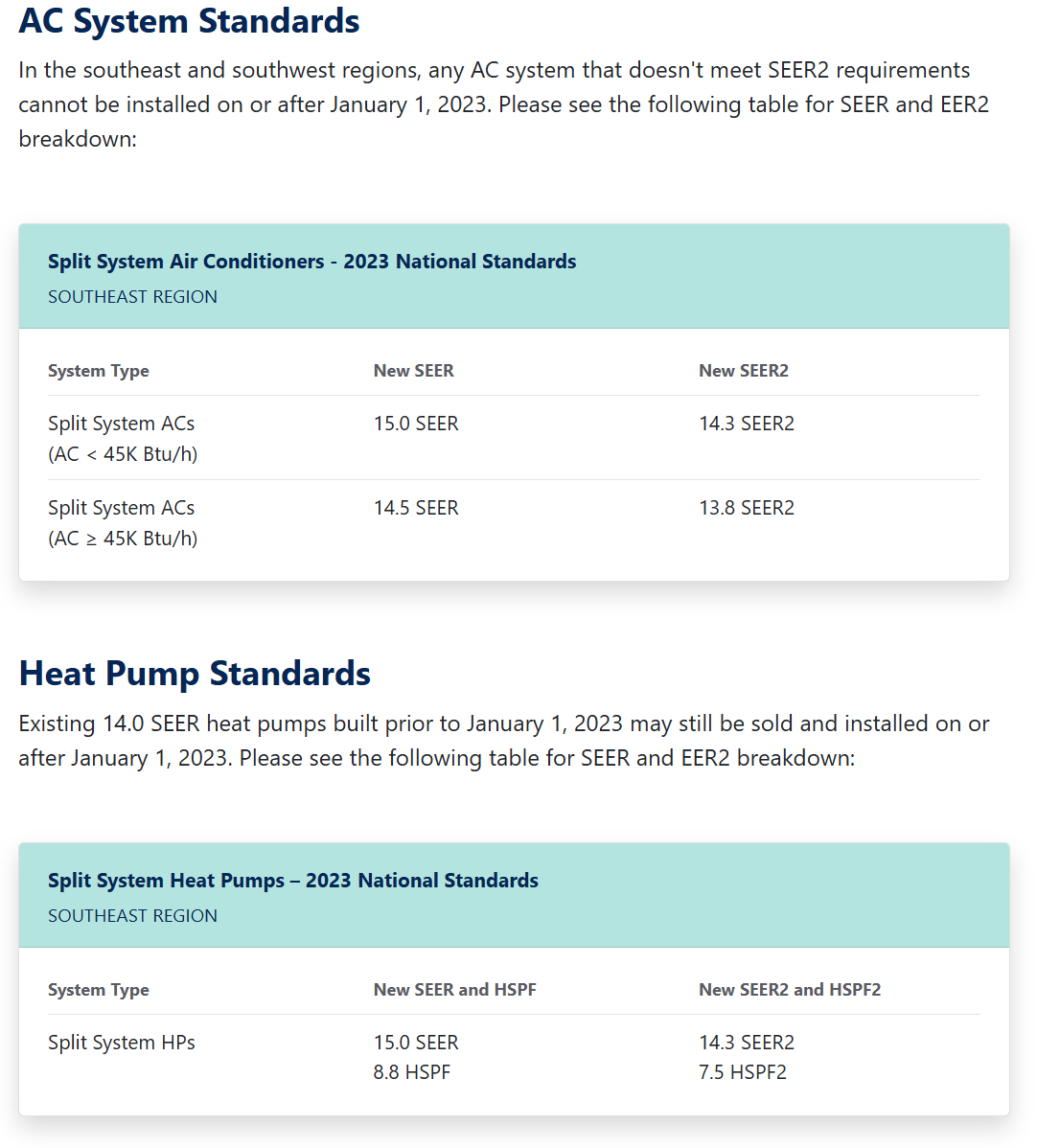
The lowest legally allowed SEER2 rating for ACs for the Southern U.S as of 2026 is up to 14.3. But opt for 16 to 18 SEER2 for substantial energy savings and comfort.
If your home encounters high energy bills or long cooling seasons, go for highly efficient units with more than an 18 SEER2 rating.
From their noise levels to efficiency, capacity, and features, make sure you compare multiple units to finally pick the right one. You must also ensure that your selected unit has a good warranty.
Ensure to get your AC installation Austin tx from a reputable company. They not only install your unit but also help you choose and run it smoothly.
Are you looking for an HVAC expert? If yes, take us on board.
We will guide you through the whole process. They will perform load calculation and proper installation of your system.
Get in touch to benefit from our extensive experience and affordable rates.
To ensure optimal performance, a professional Manual J Load Calculation is essential to determine the precise BTU capacity required based on your home’s square footage, insulation R-value, and solar heat gain. An oversized unit will cool the air too quickly without removing moisture, leading to high humidity and short cycling, while a properly sized variable-speed compressor can maintain longer, more efficient cycles for superior dehumidification.
Extreme ambient temperatures often exceed the design temperature of standard residential systems, which are typically engineered to maintain a 20-degree differential between indoor and outdoor air. High indoor temperatures are often exacerbated by thermal bridging, inadequate attic insulation, or duct leakage in unconditioned spaces like attics, which forces the system to run continuously without reaching the thermostat setpoint. With the 2026 shift to A2L refrigerants (R-454B and R-32), ensure your technician is using the correct tools and sensors, as these new systems require specific safety protocols for the Austin heat.
The Department of Energy recommends a setpoint of 78°F while home to balance energy costs with cooling needs, utilizing ceiling fans to create a wind-chill effect that allows for higher thermostat settings. For better humidity control during Austin’s muggy nights, lowering the temperature to 72°F–75°F can improve sleep quality while minimizing the latent heat load on the evaporator coil.
As of early 2026, the cost for a new high-efficiency system in Austin has increased due to the industry-wide transition to low-GWP refrigerants and more advanced variable-speed equipment.
A window AC unit is generally superior for backup cooling because its dual-hose design or external venting is more energy-efficient and provides better EER (Energy Efficiency Ratio) than most portable units. Portable units often create negative air pressure, pulling hot outdoor air into the room through gaps, whereas a properly sealed window unit maintains a better building envelope seal during extreme heat.