
Book Now
Book a free estimate


Summers in Texas are hot and muggy. And the temperature is at its highest from June to August. The average temperature in Texas this year was 84.5 degrees, with several days of triple-digit temperatures. So it is obvious that a functional Texas home needs an air conditioner installed. Find out in this guide how much an AC installation, Austin, TX costs.
A 2,000 sqft house requires 3.5 tons of central air conditioner which can range from around $5,000 to $9,000, depending on the SEER rating of the system, system size, and the company you choose. Also, keep in mind, this price range is for the installation of the unit only. And if the ductwork needs some work done as well, it will typically add $2,000 to $4,000 to the total installation costs.
Moreover, there are other factors as well that can impact the overall AC installation cost in your Austin, TX house.
While square footage is one of the many variables that affect AC installation costs in Texas, there are many other factors as well including:
Most HVAC manufacturers like Carrier recommend 3 tons as the typical AC unit size for a 2,000-2,500 sq ft home as it has a cooling capacity of 36,000 BTUs. However, in hot climates like Austin, Texas, 3 tons is the bare minimum, you may require 3.5 to 4 tons. That means an undersized AC unit, which obviously costs less to purchase and has a cheaper upfront replacement cost will not be able to cool your home properly during peak summer days. So system size and cooling capacity also determine the final cost for AC installation, Austin, TX.
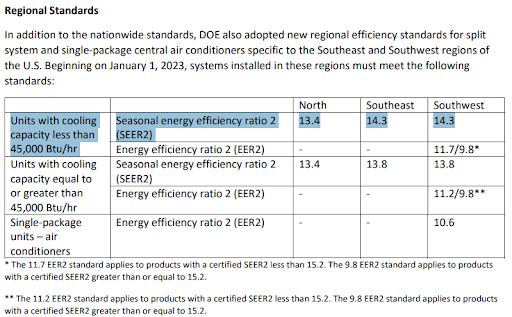
According to the U.S. Department of Energy (DOE), in southeast regions including Texas, air conditioning systems must have the SEER2 rating of 14.3 (equivalent to 15) for units under 45,000 BTUs, while units over 45,000 BTUs require 13.8 rating. And higher energy efficiency systems due to their advanced features and complex installation costs more upfront to purchase and install.
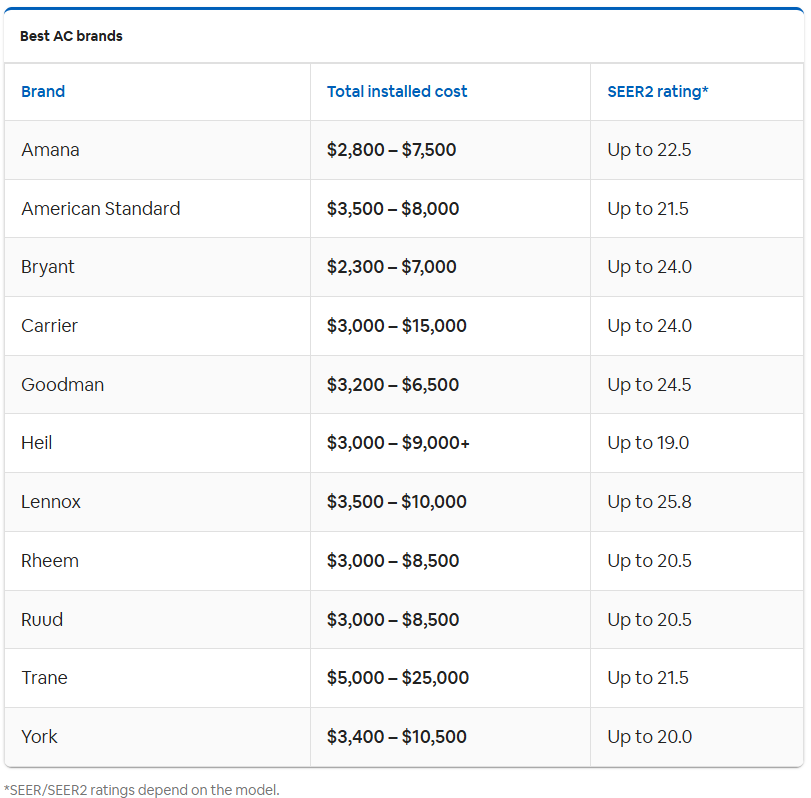
The air conditioner brand and features also play a significant role in determining the final installation cost. For instance, according to HomeGuide, the most expensive AC unit brand in the U.S. is Trane with a total installed cost of around $5,000 to $25,000. On the other hand, Goodman is a budget-friendly brand (total installed cost $3,200 to $6,500 ).
But it also offers fewer premium features and performance options. So if you pick the features and the brand, the prices will be high.
The overall condition of your ductwork also defines how much it costs to install an air conditioner in your house. If the ducts are in fair condition, no additional fee is charged. However, in case of a leaky, old, or poorly designed ductwork, you might have to set aside a budget of $2,000 to $4,000 for ductwork replacement.
As per HomeGuide, the total charges for HVAC installation with ductwork are $7,000 to $16,000. Or you can consider ductless mini-split systems as an alternative.
Homeowners wondering ‘how much does it cost to install central air in an older home’ must know that local labor rates also impact the final AC installation cost. And in metropolitan areas, prices are higher compared to rural areas.
Also, some Texas cities like Houston require a mechanical building permit for new AC installations with local authorities inspecting the installations later to verify code compliance, SEER ratings, and safety. This adds several hundred dollars to the total as well.
Dial (512) 677-4424 today to consult with our expert HVAC installers and get a tailored solution and quotation for your preferences.
While AC installation costs can feel unavoidable, there are many ways you can save on your total bill. Here’s a list of some common ways to save on AC installation in Austin, TX.
In fact, an improperly installed AC unit will cost you more in AC repairs and higher energy bills in the future. According to ScienceDirect, improperly installed central air conditioners and air-source heat pumps cost U.S. homeowners approximately $2.5 billion annually on utility bills. If you invest in quality service, it’ll last you longer and control your electricity bills too.
Dial (512) 677-4424 today to consult with our expert HVAC installers and get a tailored solution and quotation for your preferences.
If you’ve already spent thousands on repairs, look for these 3 signs to install a new central air conditioning system in your home.
According to the U.S. Department of Energy (DOE), a newly installed HVAC system will require less maintenance and save more on electric bills. Also, most air conditioners that are older than ten years use R-22 refrigerant, and EPA has banned its production and import in the U.S. Therefore, it is best if you install a newer system in your house.
The estimated installation cost of central air for a 2,000 sq ft house is $5,000 to $8,000, based on the system size, energy efficiency, and the brand you choose. Other factors like the overall ductwork condition, local labor rates, and permits also play a significant role in defining the overall AC installation costs in Texas.
But you can also save on AC installation charges with smart planning, such as getting this service in off-peak season or getting a package discount with other HVAC services. Dial (512) 677-4424 today to consult with our expert HVAC installers and get a tailored solution and quotation for your preferences.
A 2000 sq ft house in Texas typically needs a 3.5 ton air conditioner minimum. Hot climates require more cooling capacity, usually 600–700 square feet per ton. Final sizing depends on insulation, ceiling height, window exposure, and a Manual J load calculation.
A single window air conditioner cannot cool a 2000 sq ft house. Cooling that size requires multiple units totaling 36,000–48,000 BTUs. Window ACs are designed for individual rooms, not whole-home cooling.
A 3-ton AC may cool a 2000 square-foot house only in mild climates or very efficient homes. In Texas heat, 3 tons is bare-minimum and can sometimes struggle to maintain temperature during peak summer conditions.
A 2.5 ton AC is not big enough for a 2000 sq ft home in Texas. This size is typically rated for 1,200–1,500 sq ft and will run constantly, reduce comfort, and increase energy costs in hot climates.
A 2200 sq ft house typically needs a 3.5 to 4 ton air conditioner in hot climates like Texas. Homes with strong insulation and energy-efficient windows may qualify for slightly smaller systems after a Manual J calculation.
Size an AC unit for a mobile home by calculating 20–30 BTUs per square foot, depending on climate and insulation. A 1,000 sq ft mobile home typically needs a 2–2.5 ton (24,000–30,000 BTU) unit. Proper sizing also considers ceiling height, window exposure, and occupancy